AI creates a lot of activity.Return does not happen by itself.

Aiond reviews AI initiatives, pilots and tools to clarify what improves productivity, quality, revenue or cost.

Ideas, pilots and know-how become clear decisions:
scale, sharpen or stop.

Initiatives Board
IdeasPilotsToolsTeamsDataReturnMaturityRiskEffortFitStopSharpenScale
ProductivityQualityCostRevenueAdoption

The intern is not the problem.
The assignment is missing.

Imagine that from Monday morning, every person in the company had a highly motivated intern.

More capacity appears immediately. Productivity only appears when the task, boundary, quality standard and acceptance are clear.

That is exactly how it is with AI.

AI needs an assignment.

Where AI costs money, time or focus.

Many companies have ideas, pilots, tools and training. Return stays unclear as long as no clear decision follows.
01
Demos without results

The demo looks strong. Afterward, little changes.

02
Pilots without decision

Nobody says clearly: scale, sharpen or stop.

03
Know-how without adoption

Teams know the tools, but do not use them cleanly in the flow.

04
Risks without rules

Data, IP, approvals and quality are not clear.

05
AI without business model

Technology is there. The path to revenue or a new service is missing.

What Aiond clarifies.

Five questions are often enough to turn AI activity into decisions.
  • Return

    Where does AI improve productivity, quality, revenue or cost transparency?

  • Focus

    What should be stopped, sharpened or scaled?

  • Adoption

    Which tasks, workflows or decisions does AI actually change?

  • Rules

    Which data, risks, approvals and quality rules apply?

  • Business

    Which services, offerings or pricing models become possible?

What comes out of it.

Concrete decisions and working foundations — not a slide collection.
  • AI Portfolio

    Use cases, pilots and tools evaluated by return, effort, risk and fit.

  • Stop / Scale / Sharpen Decisions

    A clear rationale for what continues, changes or ends.

  • AI Rules

    Rules for data, quality, IP, approvals and human-in-the-loop.

  • Pilot-to-Use Plan

    From test to productive adoption with roles, process and acceptance.

  • Economic Return Check

    Review of budget, tools, operations and return.

Project examples.

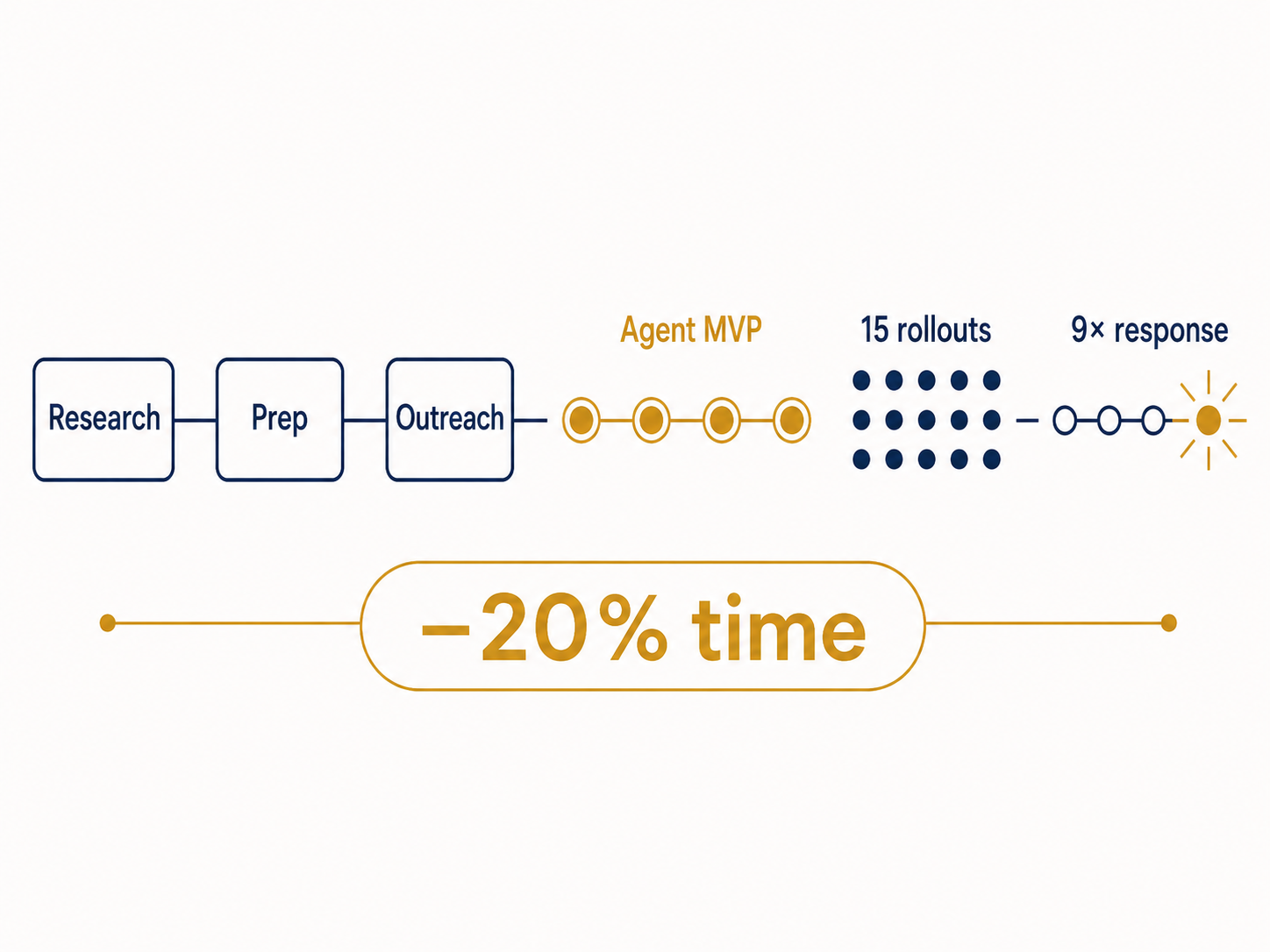
GenAI Sales — Workload Relay: Agent-MVP, 15 Rollouts, 9× Response Rate.

GenAI Sales Intelligence

Situation

Sales teams lost time in research and customer outreach.

Contribution

Development of a multi-agent MVP, validation across 15 customer rollouts and transfer into scalable use.

Result
20% time saved · higher response rate
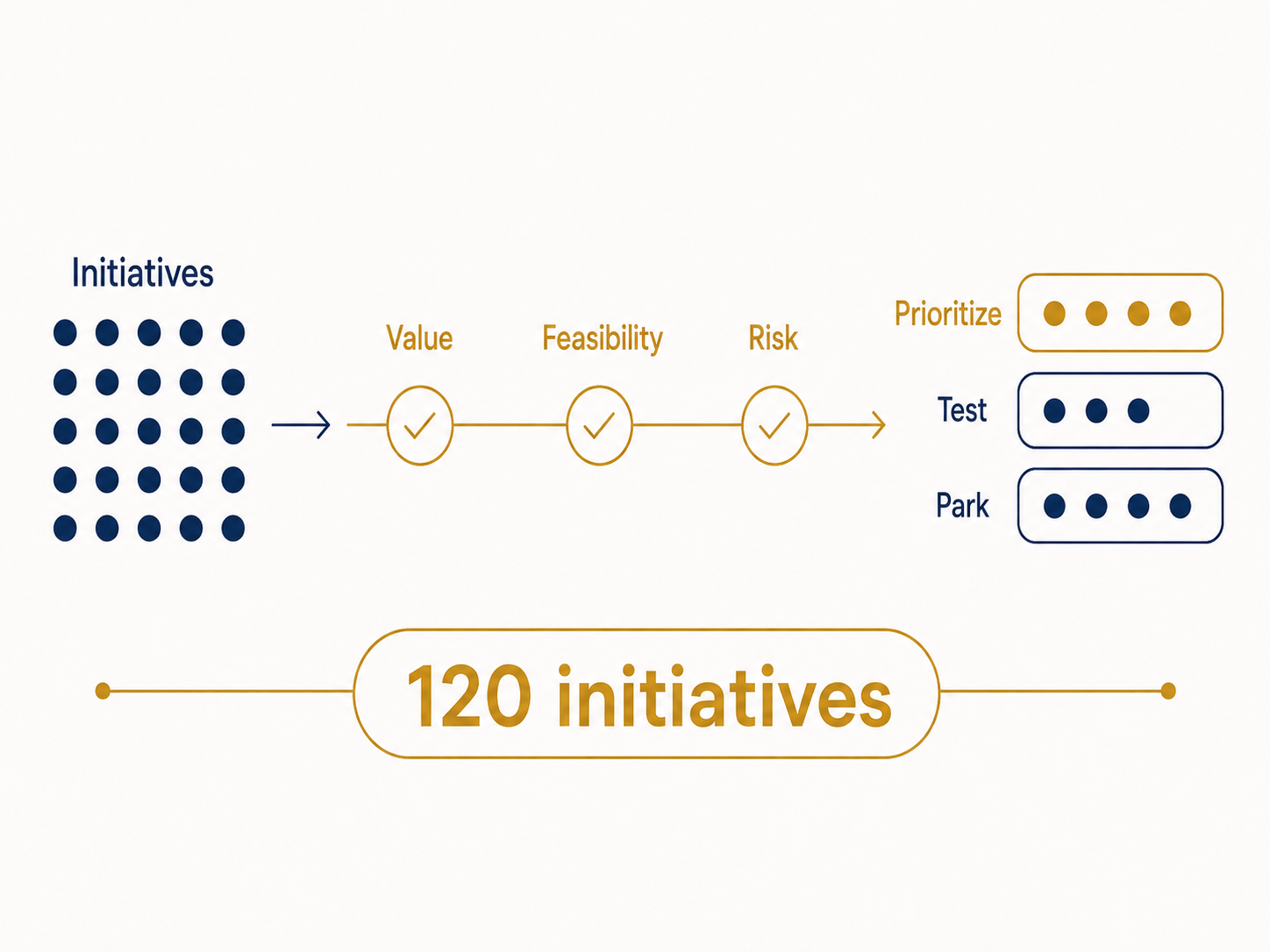
KI-Initiativen — Triage Gate für 120 Initiativen nach Value, Feasibility, Risk.

Evaluating AI initiatives

Situation

Many GenAI initiatives, but no clear logic for return, feasibility and risk.

Contribution

Set-up of an evaluation logic for 120 initiatives and operational prioritization.

Result
120 initiatives guided through clear decision logic
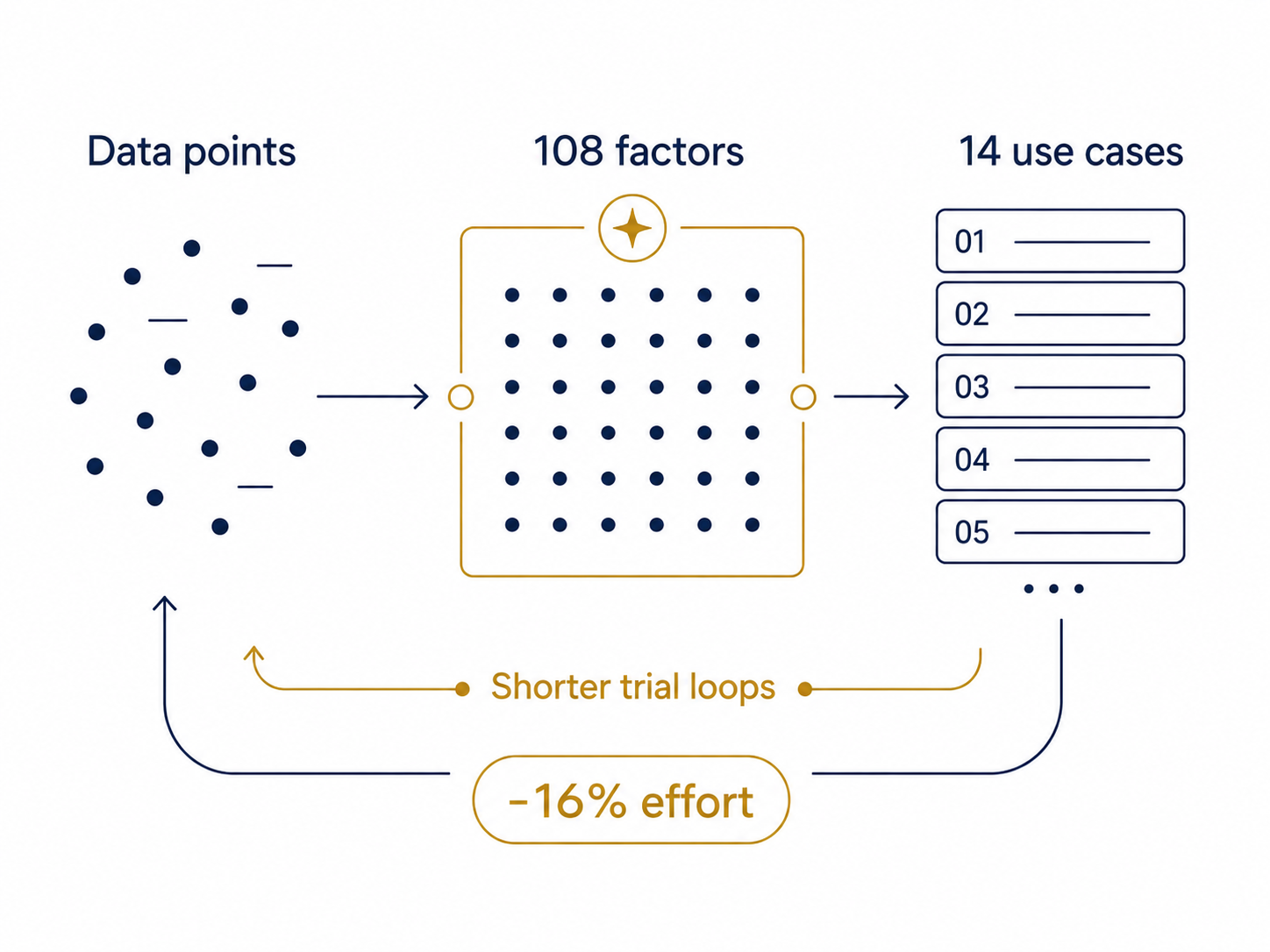
MedTech F&E — Decision Lens: 108 Faktoren werden zu 14 priorisierten Use Cases.

Bringing data into R&D decisions

Situation

R&D had data, but no usable instrument to evaluate design options faster.

Contribution

Prioritization of 14 use cases, set-up of a data model with 108 factors and transfer into a decision instrument.

Result
16% less daily effort · fewer experiment loops

Which AI activity is really worth it?

Let's review what should scale, sharpen or stop — and where AI improves productivity, quality, revenue or cost.

Sort initiativesClarify returnReview pilot